
Criminal Court Records in Miller County
A criminal court record is different from a booking record. The booking record begins with the Miller County Sheriff's Department when a person is arrested or jailed. The criminal court file begins when a charge is filed in court and the Clerk of Superior Court opens or maintains the case record. In Miller County, Clerk Gail Johnson's office manages Superior, State, and Juvenile court records from Room 103 at the Miller County Courthouse, 155 South First Street, Colquitt, Georgia 39837. The clerk can be reached at 229-758-4102 during posted weekday hours.
Felony prosecutions belong in Superior Court, which is Miller County's primary trial court and part of the Pataula Judicial Circuit. County misdemeanor and serious traffic matters are handled through State Court. Magistrate Court handles warrants, first appearances, bond, committal hearings, and warrant applications before many cases move to the prosecutor and clerk case file. Juvenile matters are handled through Juvenile Court and the clerk, but juvenile access is restricted. For a broader civil and records overview, use Miller County court records; for the arrest-to-charge path, use arrest records and charges.
How to Search Miller County Criminal Court Records
The official clerk website links to a Miller Clerk Case Search endpoint at millerclerkofcourt.com/WebCaseManagement. Research could not inspect the vendor case-search screens fully, so the online portal should be treated as a first attempt rather than the only access channel. If the portal does not return the needed file, contact the Clerk of Superior Court directly by phone, in person, or by mail to P.O. Box 66, Colquitt, GA 39837.
- Identify whether the matter is felony Superior Court, misdemeanor State Court, Magistrate warrant or bond, Juvenile, or a federal case outside the county system.
- Try the clerk's official case-search link for Superior, State, and Juvenile records, using the defendant name, case number, filing year, and criminal case type if known.
- If the online result is unavailable, call 229-758-4102 or visit Room 103 with the defendant name, approximate arrest or filing date, charge, and requested copy type.
- For bond, first appearance, or warrant-stage records, call Magistrate Court in Room 110 at 229-758-4110 and ask whether the record has moved to the clerk file.
- For jail custody, booking, or release questions, contact the Sheriff's Department at 300 W. Pine Street, Colquitt, 229-758-3421, or use Miller County inmate records.
Miller County's open-records form says constitutional-office records, including Sheriff, Clerk of Court, and Magistrate/Probate records, must be requested directly from the office that holds them. That instruction matters for criminal cases because the court file, booking record, warrant, and prosecutor file may be held by different offices even when they concern the same arrest.
Miller County Criminal Case Flow
Criminal cases in Miller County usually move from arrest or citation into Magistrate Court for warrant, first appearance, bond, or committal activity, then to the prosecutor for formal charging, and then into the clerk's case file. The Pataula Judicial Circuit District Attorney handles felony prosecution. County minutes identify State Court as the county misdemeanor and serious traffic court, with city traffic matters transferring to State Court after a jury demand.
Case flow: Arrest or warrant › first appearance and bond › accusation or indictment › arraignment › motions or plea › disposition › sentence or probation.
| Stage | What Happens |
|---|---|
| Arrest, warrant, or citation | The sheriff, arresting agency, or court process creates the first law-enforcement or warrant record. This is not always the same as the formal court charge. |
| First appearance and bond | Magistrate Court handles early appearance, bond, extradition, committal, and warrant-related hearings. Serious bail issues may require a Superior Court judge. |
| Formal charge | The prosecutor files an accusation or seeks an indictment. That charging document becomes part of the court record maintained by the clerk. |
| Arraignment, motions, and hearings | The docket may show plea entries, attorney appearances, motions, continuances, bond orders, and hearing dates. |
| Disposition and sentence | The case record may show guilty plea, verdict, dismissal, nolle prosequi, sentence, fines, costs, probation terms, and final disposition. |
What a Miller County Criminal Court Record Shows
Research did not locate a publicly inspectable Miller case-detail sample, so field expectations must come from the local research inventory and ordinary clerk-file contents documented there. A Superior or State criminal file may include the case number, court, defendant, attorney, prosecutor, charges, accusation or indictment, warrant and bond entries, docket events, plea, orders, sentence, fines, costs, probation, and disposition. Certified copies come from the Clerk of Superior Court, not from a third-party search site.
| Field | What It Shows |
|---|---|
| Case number | The clerk's tracking number for the criminal case or filed charge. |
| Court and case type | Whether the case is in Superior Court, State Court, Magistrate-related filing, or another court level. |
| Defendant and attorneys | The accused person and any retained or appointed counsel listed in the docket. |
| Charges | The offense name, filed count, amended count, or charge language from an accusation or indictment. |
| Warrant and bond entries | References to arrest warrants, bench warrants, first appearance, bond amount or type, and release conditions if entered in the case. |
| Plea and disposition | Guilty, not guilty, nolo, dismissed, acquitted, nolle prossed, or other outcome language shown by the court. |
| Sentence | Confinement, probation, fines, costs, conditions, or other sentencing terms entered by the court. |
The Prosecuting Attorneys' Council publishes a Miller County prosecutor result for the Pataula Judicial Circuit at PACGA's Miller County lookup.
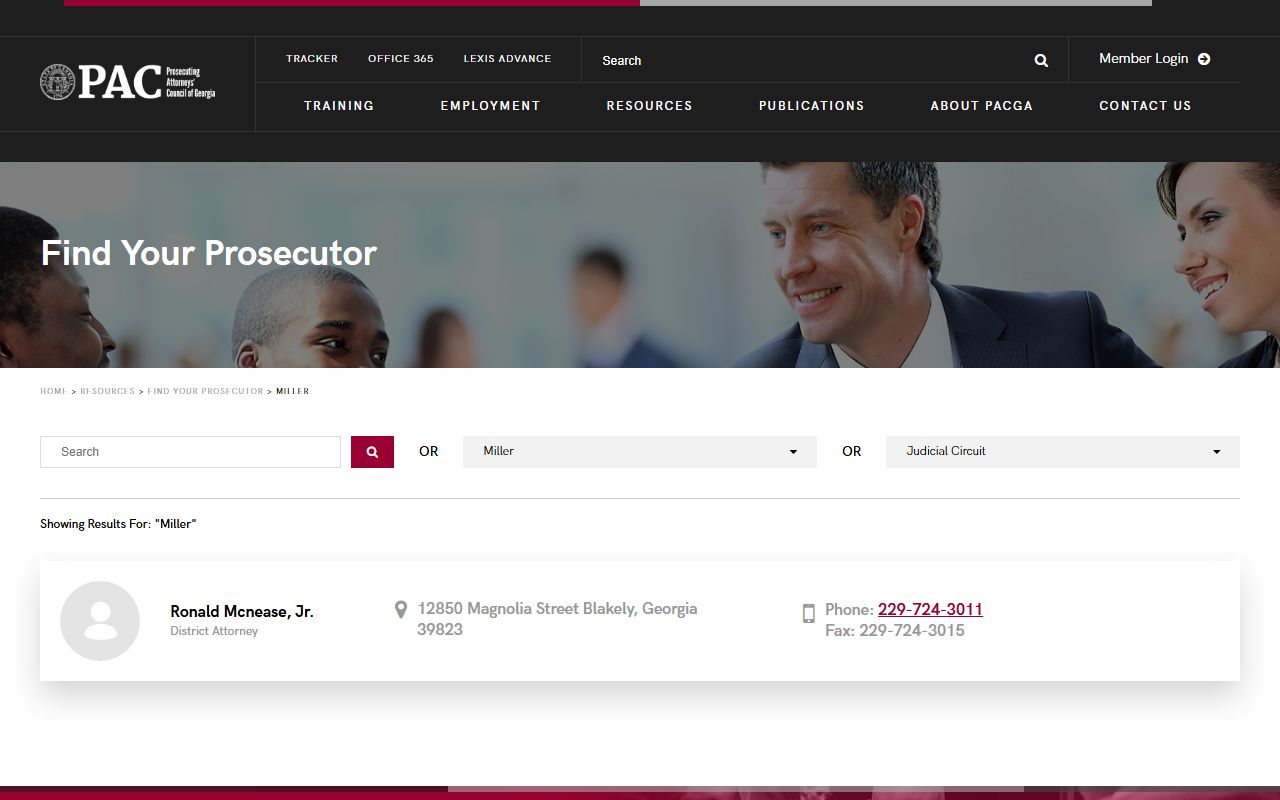
That prosecutor source connects felony charging decisions to the court file, but filed case copies still come from the Clerk of Superior Court.
Charges vs. Convictions
A charge is an allegation filed by the prosecutor or returned by a grand jury. A conviction is a final outcome after a guilty plea, nolo plea accepted by the court, or verdict. Miller County criminal court records may show charges that were later amended, reduced, dismissed, or nolle prossed. A reader should not treat a listed charge as a conviction unless the disposition or sentencing entry confirms that result.
| Point of comparison | Charge | Conviction |
|---|---|---|
| Timing | Appears when the accusation, indictment, warrant, or other charging entry is filed. | Appears after plea, verdict, or final judgment. |
| Meaning | An allegation that the defendant committed an offense. | A court outcome that the defendant was found or admitted guilty. |
| Record reading | Check whether the count was pending, amended, dismissed, or nolle prossed. | Read the sentence, probation, fines, and final disposition together. |
| Where to verify | Clerk file, prosecutor filing, warrant, or bond record. | Certified disposition from the Clerk of Superior Court. |
Bond, Prosecutor, and Public Defender Records
Georgia bail law matters when reading Miller County criminal records. O.C.G.A. 17-6-1 covers bail authority for certain serious offenses, including situations where a Superior Court judge may be required. O.C.G.A. 17-6-2 covers misdemeanor bail and driver's license collateral. Those statutes do not replace the local docket, but they explain why a bond entry may point to Superior Court even when the arrest or first appearance began elsewhere.
The District Attorney for the Pataula Judicial Circuit is Ronald "Vic" McNease Jr., 12850 Magnolia Street, Blakely, Georgia 39823, 229-724-3011. The Pataula Circuit Public Defender is Marla Chambless, with the main office at 575 College Street, Blakely, Georgia 39823, 229-758-6236. GPDC notes the circuit serves seven rural southwest Georgia counties and lists a Randolph/Terrell satellite office in Colquitt. Prosecutor and defender offices may confirm representation or procedural routing, but certified case records remain a clerk function.
The Georgia Public Defender Council publishes Pataula Circuit office information at its Pataula Circuit page.
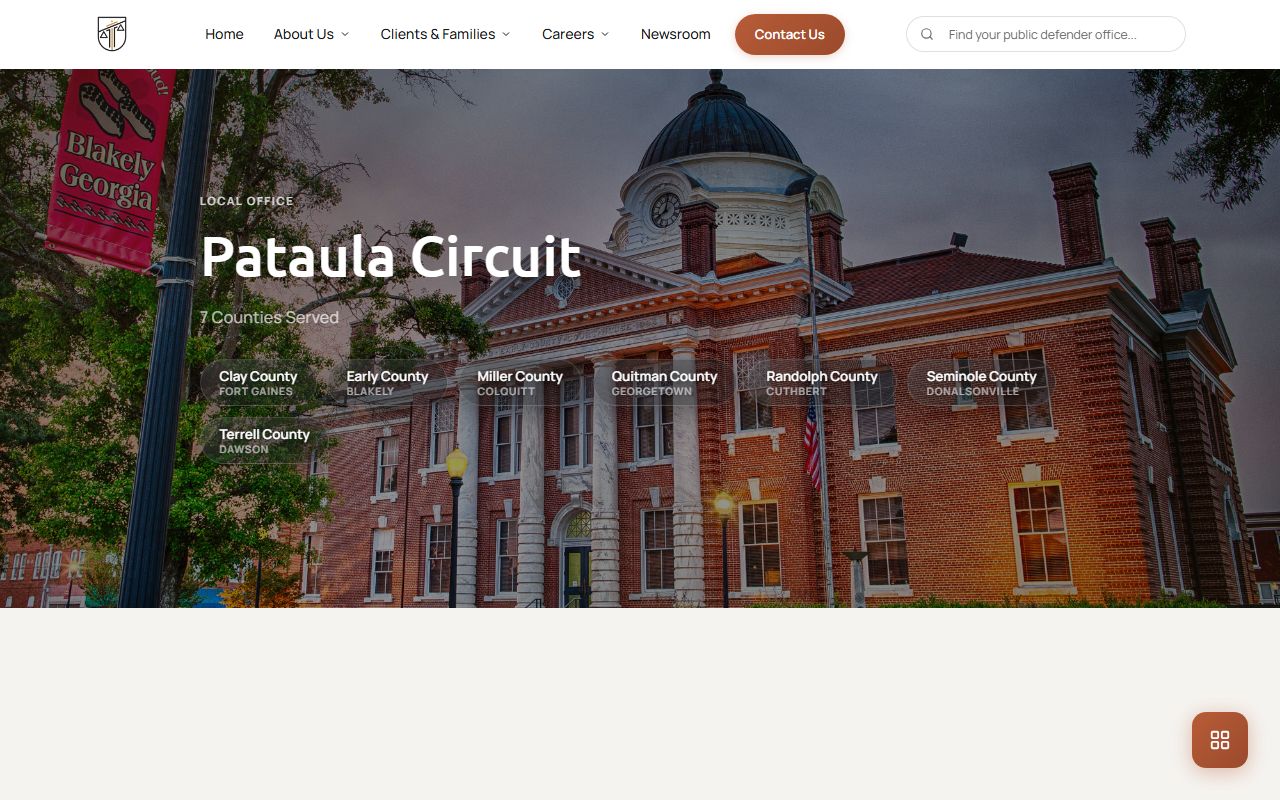
Use the public-defender listing for defense-office routing, especially when a pending criminal docket shows appointed counsel or an indigent-defense issue.
Georgia's misdemeanor bail statute is available from O.C.G.A. 17-6-2.
That bail authority helps explain why a criminal record may include bond, release, driver's license collateral, or bench-warrant entries before final disposition.
Sealed vs. Expunged Records
Georgia commonly uses the term record restriction for eligible criminal-history records. The research specifically warns not to tell readers that expungement deletes everything. A restricted Georgia record may limit public dissemination while still allowing some court, prosecutor, or law-enforcement access. A sealed court file is also not the same as a GBI or GCIC criminal-history restriction.
| Point of comparison | Sealed court file | Restricted criminal history |
|---|---|---|
| What changes | Public access to the court file is limited by court order or confidentiality law. | Public dissemination of eligible criminal-history information is limited under O.C.G.A. 35-3-37. |
| Who to ask first | The Clerk of Superior Court for the case file and any required petition or order. | The arresting agency, prosecutor, court, and GBI or GCIC process depending on the record. |
| Common limits | Juvenile, adoption, mental-health, active sealed, or protected-victim matters may be withheld. | Dismissed, not presented, nolle prossed, acquitted, or otherwise eligible matters may qualify, but eligibility is fact-specific. |
Public Access to Criminal Court Records
Georgia open-records law generally favors inspection of public records, but criminal access in Miller County still depends on the correct custodian and on exemptions. O.C.G.A. 15-6-61 and 15-6-62 support the clerk's record duties and public reading or reproduction access for civil and criminal proceedings. O.C.G.A. 50-18-70 through 50-18-72 define public-record access, timing, fees, denials, and exemptions. Agencies may charge for search, redaction, and production after the first quarter hour and may charge photocopy costs.
Key Statutes:
O.C.G.A. 15-6-62 - clerk recording and public reading or reproduction access for court proceedings.
O.C.G.A. 50-18-72 - exemptions that may protect confidential law-enforcement, juvenile, medical, or otherwise restricted records.
Restricted Criminal Court Records in Miller County
Adult criminal files are often public, but Miller County requesters should expect limits for Juvenile Court records, adoption matters, mental-health or involuntary-treatment records, sealed or restricted criminal-history records, and filings that contain sensitive identifiers. Georgia Code 9-11-7.1 requires redaction of personal identifiers in civil filings, and similar privacy principles affect copies released from mixed files. If a record is not available online, ask the Clerk of Superior Court whether it is online, paper, archived, sealed, restricted, or held by another office. For active warrants, use Miller County warrant records and contact the issuing court or sheriff directly.