
Search Miller County Court Records
The main local path for Miller County court records is the Clerk of Superior Court. The clerk is the custodian for Superior, State, and Juvenile court records, and the county Superior Court page describes that office as the place that files criminal cases, civil cases, divorce matters, land and equity matters, criminal warrants, and many recorded instruments. The clerk site includes an official Miller Clerk Case Search link, but the research notes say the vendor endpoint redirected and could not be fully inspected. Treat that link as a first attempt, not as proof that every Miller County court record is online.
A useful Miller County court records search starts by naming the court level. Felonies, divorce, major civil cases, adoptions, name changes, habeas matters, and land or equity cases point to Superior Court. State Court handles county misdemeanors and serious traffic matters. Magistrate Court handles arrest and search warrants, first appearances, bond, committal, warrant applications, dispossessory cases, garnishments, bad checks, shoplifting, criminal trespass, and civil claims within the statutory limit. Probate Court handles estates, wills, guardianships, marriage licenses, vital records, and certain other matters where Georgia law allows. City traffic may begin in municipal court.
- Identify the court type before searching. Use Superior Court for felony, divorce, land, equity, and major civil files; use State Court for county misdemeanor and serious traffic records; use Room 110 for probate or magistrate matters.
- Try the clerk's official case-search link for Superior, State, and Juvenile court records. If the portal does not return results, do not assume the case is absent.
- Call or visit Clerk Gail Johnson's office in Room 103 and ask whether the file is online, paper, archived, sealed, restricted, or held by another court office.
- For Probate Court or Magistrate Court records, call Room 110 or use Georgia Probate Records when the record type appears in that statewide portal.
- For older, restricted, certified, or missing online records, send a direct request to the office that holds the file and include names, case number if known, case type, and approximate year.
Note: Miller County's open-records form says constitutional-office records must be requested from the office that keeps them.
Miller County Court Records Search Fields
The local clerk case-search fields were not visible in the research environment, so field names should not be invented. Miller County court records still have searchable paths through statewide systems when the record is a land, lien, UCC, notary, probate, marriage, estate, will, guardianship, or traffic-docket entry. The GSCCCA search page is important because the Clerk of Superior Court records real estate transactions, plats, liens, UCCs, trade names, fi. fas., military discharges, and notary appointments, but GSCCCA is not a full criminal or civil case-file portal.
| Field Label | Type | Required | Notes / Format |
|---|---|---|---|
| Miller Clerk Case Search fields | Not visible | n/a | The official endpoint was linked from the clerk site but not inspectable; use clerk phone, counter, mail, and direct request fallbacks. |
| Index category | Tile or link | Yes | GSCCCA options include UCC, Real Estate, PT-61, Lien, Plat, Notary, and Carbon Registry. |
| Name Search | Link | Optional | Searches consolidated GSCCCA indexes alphabetically by name where available. |
| Book Page Search | Link | Optional | Useful when a county, book, and page are known for recorded instruments. |
| File Number Search | Link | Optional | Used for UCC file-number lookup. |
| Certified Search Request | Login link | Yes for certified search | Requires a valid account and applies to certified GSCCCA searches, not ordinary court case copies. |
| Georgia Probate Records tiles | Portal tile | No | Estate, recorded marriage, traffic docket, will, guardianship, death, hearing calendar, and marriage application functions may appear. |
The GSCCCA service descriptions help explain why these statewide tools are indexes rather than the full Miller County court record. Use them for recorded-instrument research, then return to the clerk for a certified court file or a full docket. The GSCCCA service page is part of the records search map because Miller County's clerk duties include both court files and recorded public instruments.
GSCCCA's service-description page shows how statewide record services are organized.
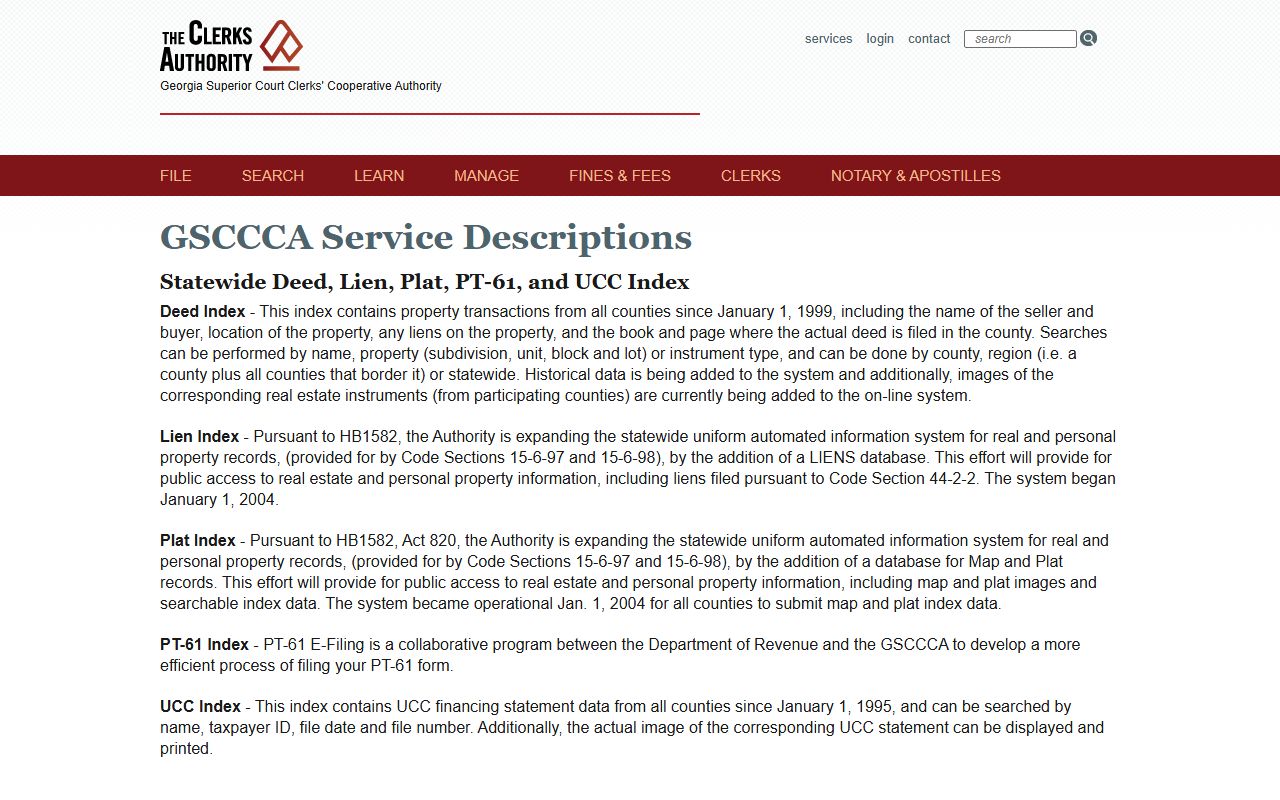
That distinction matters in Miller County because a deed index, lien index, or UCC search can support a court-record question without replacing the clerk's case file.
Miller County Court Record Types
Miller County court records are split across local court functions. Superior Court records include felony criminal cases, divorce and annulment filings, adoptions, name changes, habeas cases, suits for damages, garnishments, repossessions, land matters, equity matters, and appeals from lower courts where the law allows. State Court records include county misdemeanor and serious traffic matters, with county minutes naming DUI, reckless driving, suspended license, suspended registration, speeding, simple battery, family violence, and criminal trespass in a State Court backlog discussion. Juvenile records are handled through the clerk but are not public in the same way adult records are.
Probate and Magistrate records are handled in Room 110. Probate records include wills, estates, guardianships, conservatorships, vital records, marriage licenses, and involuntary-hospitalization matters. Magistrate records include civil claims, dispossessory cases, garnishments, warrant applications, arrest and search warrants, bond, first appearance, committal, and some minor criminal matters. Sheriff's records are separate from court records, but arrest, warrant execution, booking, bond, and court-order service facts may explain why a court case appears.
- Criminal court records show formal charges, warrants, bond, arraignment, pleas, motions, orders, sentence, fines, probation, and disposition when those items are part of the case file.
- Civil court records may show plaintiff, defendant, claim type, filing date, service, motions, orders, judgment, garnishment, repossession, habeas, or land and equity entries.
- Family and divorce records are Superior Court civil files, while sensitive family, adoption, or minor details may be restricted.
- Probate and marriage records may be checked through Probate Court and, for some functions, through the statewide Georgia Probate Records portal.
- Recorded land, lien, UCC, plat, notary, and trade-name records are clerk records that may be indexed through GSCCCA rather than the case-search portal.
The GSCCCA statewide search tools show the record categories that often sit beside Miller County court records in the clerk's office.
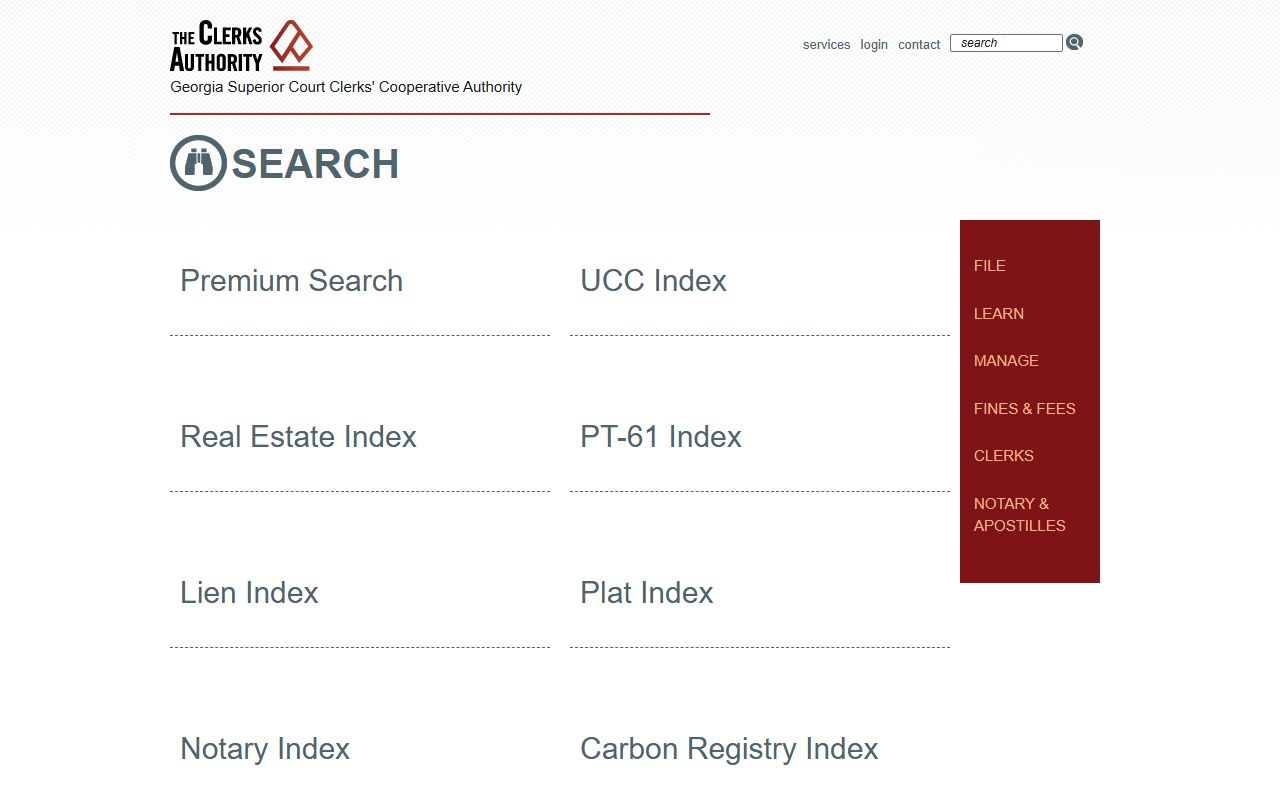
Use GSCCCA for the indexed instrument side of the clerk's work, then use the Miller County Clerk of Superior Court for the underlying court case file.
What Miller County Court Records Show
A Miller County court record does not always show the same fields in every court. A Superior or State case file may include the case number, court, case type, filing date, assigned judge, parties, attorneys, charges or causes of action, accusation or indictment, warrants, bond, arraignment, motions, orders, pleas, trial settings, hearing dates, sentence, disposition, fines, court costs, probation, and docket entries. Probate records may include estate name, decedent, petitioner, executor or administrator, status, filing date, letters, notices, objections, orders, guardians, conservators, and accounting filings.
| Field | What It Shows |
|---|---|
| Case number | The court's tracking number for a Miller County court record or docket. |
| Court and case type | Whether the matter belongs in Superior, State, Juvenile, Probate, Magistrate, or Municipal Court. |
| Filing date | The date the case, petition, accusation, indictment, claim, or probate matter was opened. |
| Parties | Names of plaintiffs, defendants, petitioners, respondents, decedents, estates, or protected persons where public. |
| Judge or court officer | The assigned judge, probate judge, magistrate, or other judicial officer when listed. |
| Charges or claims | Criminal charges, civil causes of action, claim amounts, warrants, or probate requests. |
| Docket entries | A chronological list of hearings, filings, orders, continuances, pleas, or judgments. |
| Disposition | The outcome of a charge, claim, petition, estate filing, motion, or full case. |
Because no viewable Miller County case-detail sample was available in the official sources, those fields should be treated as a case-file inventory rather than a promise that a public screen will show each item. Certified copies, sealed files, older files, and archived material may require a clerk search. For the full event list and hearing history, a reader may also need the Miller County court dockets path.
Miller County Court Records Access Law
Georgia law gives the public broad access to government records, but Miller County court records are still office-specific. O.C.G.A. 50-18-70 states the public-policy rule for inspection of public records. O.C.G.A. 50-18-71 covers timing, fees, denials, and electronic records. O.C.G.A. 50-18-72 lists exemptions. For Superior Court clerk duties, O.C.G.A. 15-6-61 and O.C.G.A. 15-6-62 are the key clerk-record authorities.
The Governor's open-records overview and the Georgia Secretary of State's open-records cost guidance are useful for timing and fees. The state summary says agencies may charge for search, redaction, and production after the first quarter hour, and photocopies are listed at ten cents per page. Miller County's own open-records form adds the local rule that constitutional offices, including the Sheriff, Clerk of Court, Tax Commissioner, and Magistrate/Probate, must receive requests directly.
Note: Georgia access law does not require a Miller County office to create a new report that does not exist.
GSCCCA UCC system fee guidance gives statewide examples for certified UCC searches and copy costs.
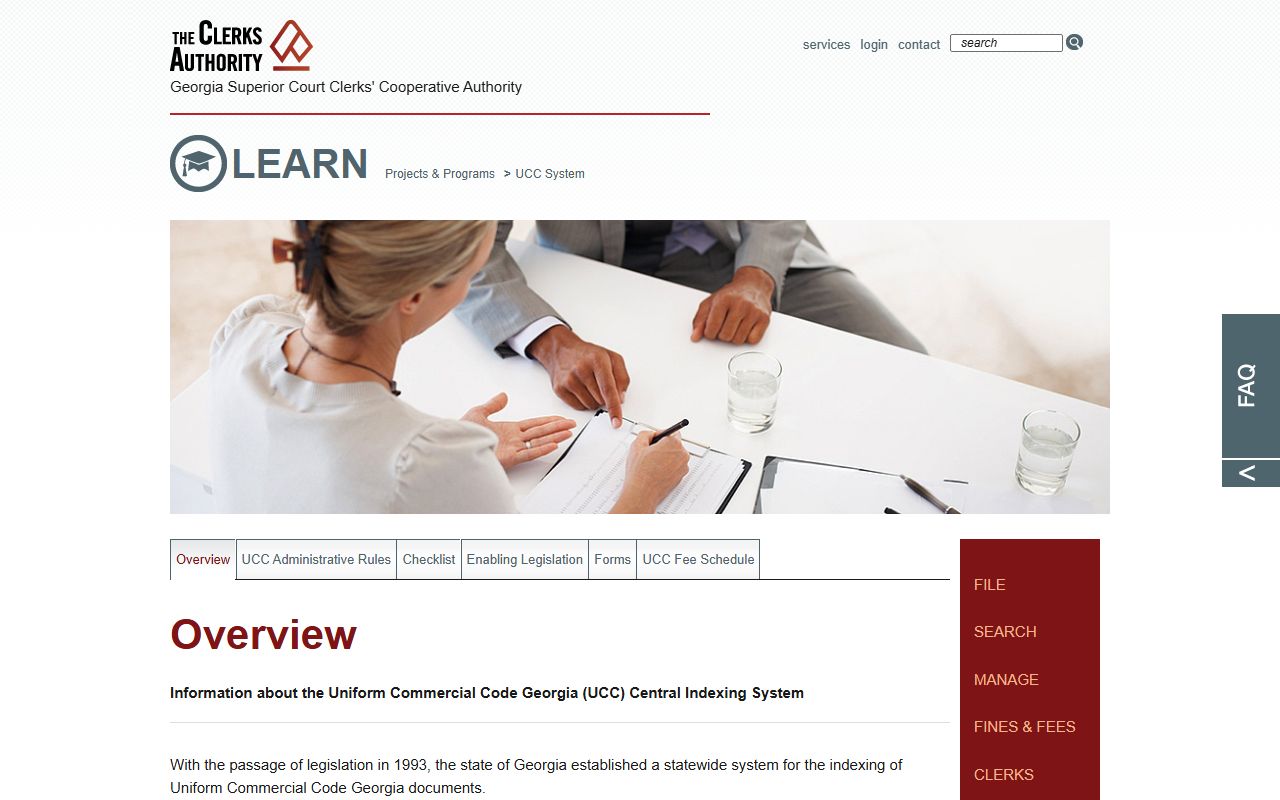
Those GSCCCA fees apply to that statewide service, so they should not be treated as a complete local court-case copy fee schedule.
Georgia's open-records overview supplies the statewide frame for Miller County public-record requests.
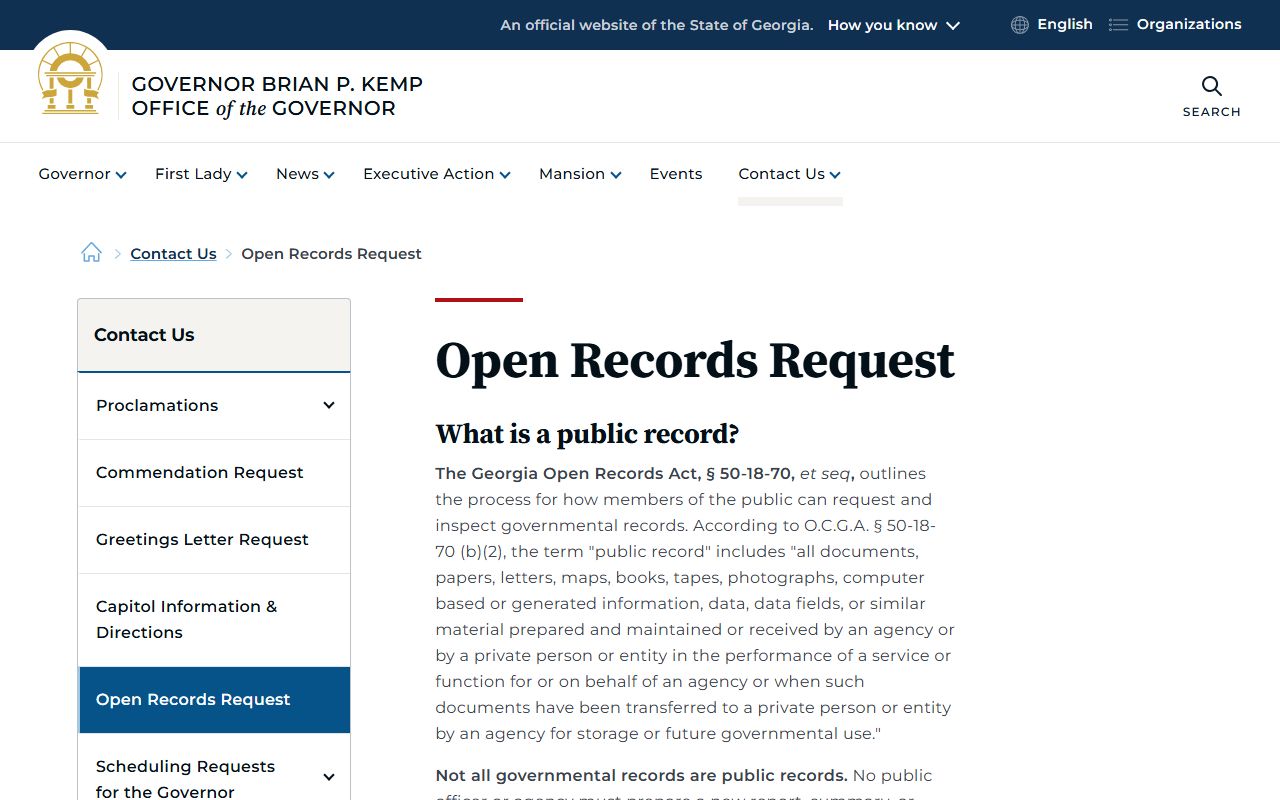
The practical Miller County rule is to send the request to the office that actually holds the court record, not to a general county address by default.
The Secretary of State cost guidance is useful when estimating copying and production charges for Miller County court records.
Call the clerk or court office before mailing payment because the research did not locate a complete local court-copy payment page.
Restricted Miller County Court Records
Some Miller County court records are public only in part, or not public through ordinary search. Juvenile records are handled through the clerk but are restricted. Adoption records, mental-health or involuntary-hospitalization matters, some guardianship details, sealed criminal records, and records affected by Georgia criminal-history restriction rules may require a court order, direct inquiry, or a different legal process. Georgia also requires sensitive personal identifiers to be removed or masked in civil filings under O.C.G.A. 9-11-7.1.
For criminal-history restriction, the first step is to tell the difference between an arrest record, a clerk case record, and a GBI or GCIC criminal-history record. If a charge was dismissed, not presented, nolle prossed, acquitted, or otherwise eligible, O.C.G.A. 35-3-37 may guide the restriction process. That does not mean every paper, docket entry, or law-enforcement record disappears. Court staff can tell a requester whether a petition, order, or direct agency procedure is needed, but staff cannot provide legal advice.
Miller County Court Records Requests
In-person and mail requests remain important in Miller County because the official case-search endpoint was not fully inspectable and because many records are held by separate offices. Bring or include the full name, case number if known, approximate filing year, case type, court level, and whether the request is for plain copies, certified copies, inspection, or a docket check. If the request is for Probate Court or Magistrate Court, contact Room 110 rather than sending it to the Clerk of Superior Court.
Clerk of Superior Court
155 South First Street, Room 103
P.O. Box 66
Colquitt, GA 39837
229-758-4102
Monday-Friday, 9:00 a.m.-5:00 p.m.
Probate and Magistrate Court
155 South First Street, Room 110
Colquitt, GA 39837
229-758-4110
Monday-Friday, 9:00 a.m.-5:00 p.m.
For general county administrative records, contact the County Manager or County Clerk, not the court clerk. For sheriff, jail, warrant-execution, or law-enforcement records, use the Sheriff's Department. That office split is the main reason a Miller County court records search works best as a routing process rather than a single database lookup.