
Miller County Court Dockets
A court docket is the case's running event list. In Miller County, a docket may show the filing date, court, case number, parties, attorneys, judge, hearing dates, pleas, motions, orders, continuances, warrants, bond events, dispositions, sentence entries, costs, or probation terms when those items are part of the case history. A docket can be brief. It may say that a motion was filed or a hearing was continued without showing the full motion, transcript, exhibit, or order text.
Miller County court dockets should be read as routing tools. Superior Court dockets point toward felony, divorce, land, equity, major civil, habeas, adoption, name-change, and appeal files. State Court dockets point toward county misdemeanor and serious traffic matters. Magistrate dockets can involve warrants, first appearances, bond, committal, warrant applications, small civil claims, dispossessory cases, and garnishments. Probate dockets can involve estates, wills, guardianships, conservatorships, vital-record issues, marriage matters, and hearings that fall under probate jurisdiction.
- Docket
- A chronological list of case events, filings, hearings, and rulings.
- Disposition
- The final outcome of a charge, claim, motion, petition, or case.
- Continuance
- A postponement of a hearing, trial, or other court setting.
- Order
- A judge's written ruling or instruction in the case.
Find Miller County Court Dockets
The Clerk of Superior Court website includes a Court Calendars navigation item, and the research source confirms that local calendar navigation exists even though the page is thin. The same clerk site links to the official case-search endpoint for Superior, State, and Juvenile records. The research environment could not inspect the vendor endpoint, so a docket lookup should combine the online path with the clerk counter, phone, and mail fallbacks. For Pataula Judicial Circuit Superior Court settings, circuit pages can also help identify judges and court-office contacts.
- Start with the court level. Use Superior Court for felony, divorce, land, equity, and major civil dockets; use State Court for county misdemeanor and serious traffic dockets.
- Check the Miller clerk court calendar page and the official clerk case-search link from the clerk site.
- If no docket appears, call the Clerk of Superior Court at 229-758-4102 with the name, case number if known, case type, and approximate hearing date.
- For Probate Court or Magistrate Court dockets, call Room 110 at 229-758-4110 or check the statewide Georgia Probate Records calendar tools when the record type fits.
- For older dockets, archived files, sealed entries, or records not exposed online, ask the court office whether inspection or a written copy request is required.
Note: An online calendar gap does not prove there is no Miller County docket or court setting.
Miller County Docket Fields
The research did not locate a public, inspectable Miller County docket sample. The sample fields below come from the court-record inventory in the research file and should be treated as the kinds of fields to request or confirm through the clerk, not as a guaranteed public screen layout. A docket may show only the event history, while the full case record may include motions, orders, warrants, sentence sheets, exhibits, or other documents.
| Field | What It Shows |
|---|---|
| Case number | The tracking number assigned by the court or clerk. |
| Court | Superior, State, Juvenile, Probate, Magistrate, or Municipal Court where the matter is pending. |
| Case type | Criminal, civil, divorce, probate, traffic, warrant, garnishment, dispossessory, or other category. |
| Filing date | The date the case, petition, accusation, indictment, claim, or warrant matter began. |
| Parties | Defendant, plaintiff, petitioner, respondent, estate, decedent, or other public party names. |
| Event date | Date of a hearing, arraignment, plea, motion, order, continuance, trial, or disposition. |
| Event type | The docket action, such as arraignment, motion, order, judgment, sentence, or hearing notice. |
| Disposition | The outcome of the charge, claim, petition, or docket event when entered. |
Miller County Docket Sources
Miller County dockets are not held by one public calendar. The local clerk manages Superior, State, and Juvenile records, while the Probate and Magistrate Court office manages Room 110 matters. The Pataula Judicial Circuit matters because Superior Court judges serve multiple counties, including Clay, Early, Miller, Quitman, Randolph, Seminole, and Terrell. Circuitwide resources may identify judge contacts, but the local clerk remains the case-file and docket custodian for Miller County Superior, State, and Juvenile records.
- Superior Court dockets cover felony, divorce, land, equity, habeas, adoption, name-change, major civil, and appeal-related matters.
- State Court dockets cover county misdemeanor and serious traffic matters described in local minutes, including DUI and suspended-license cases.
- Magistrate Court dockets cover warrants, first appearances, bond, committal, civil claims, garnishments, and dispossessory matters.
- Probate Court dockets cover estates, wills, guardianship, conservatorship, marriage, vital-record, and authorized traffic or misdemeanor functions.
- Municipal Court dockets cover city ordinance or traffic matters where applicable, with jury-demand traffic cases moving to State Court under the local minutes.
The Pataula Judicial Circuit clerks page lists the Miller County clerk contact used for Superior Court docket routing.
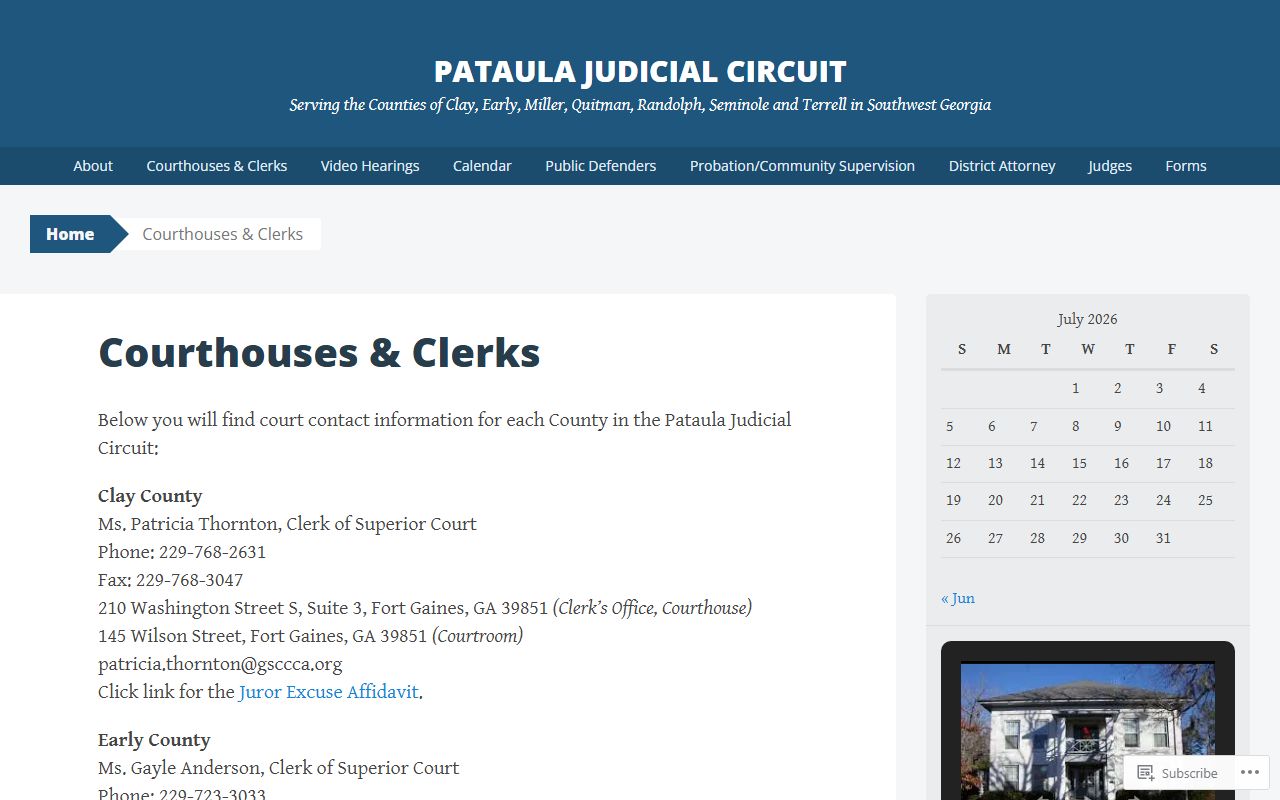
That circuit page reinforces that docket questions still return to the county clerk when the case is filed in Miller County.
Miller County's Pataula Judicial Circuit page supplies a local circuit contact point for Superior Court operations.
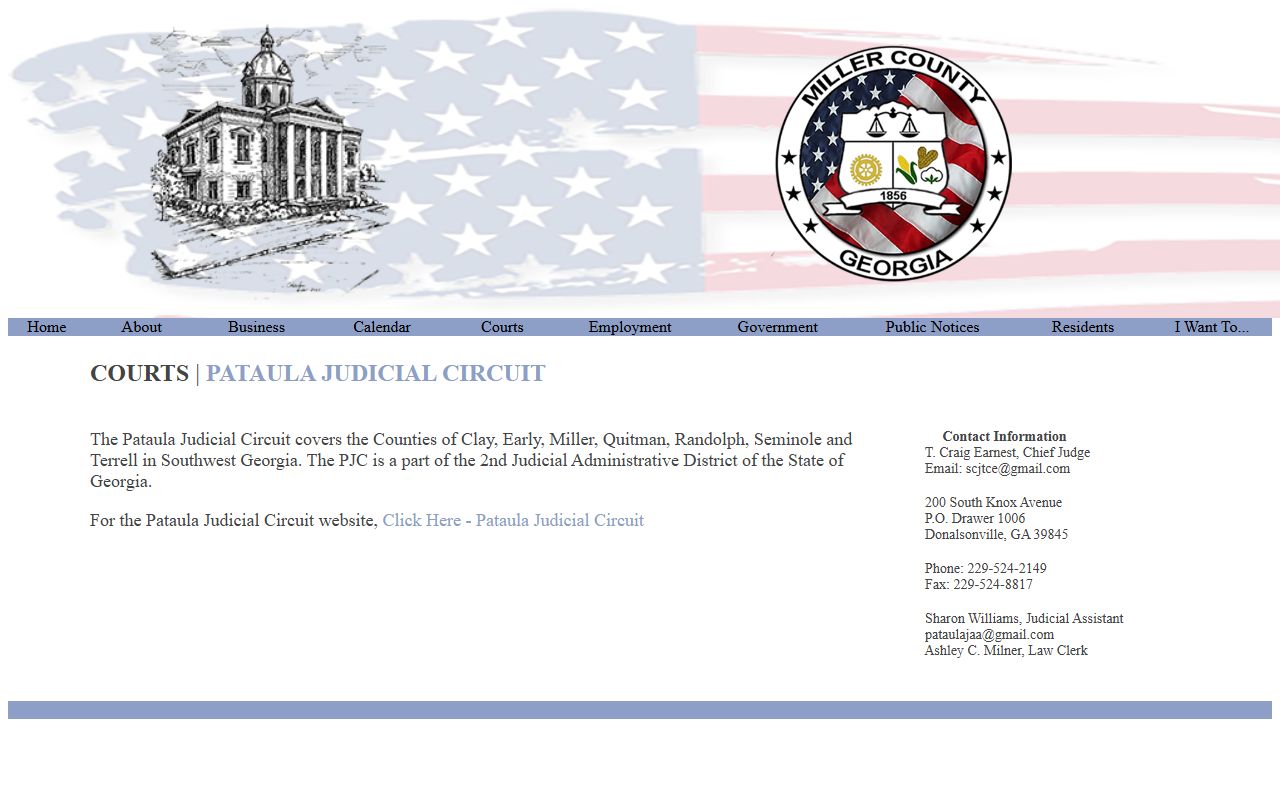
Use that source for circuit context, then use the clerk or court office for the case-specific docket entry.
Dockets vs Miller County Records
A Miller County docket is the index of what happened in a case. The full Miller County court record is the file behind those entries. For example, the docket may show that an indictment was filed, a plea was entered, a hearing was continued, or an order was signed. The court record may include the indictment, plea form, order, sentence, probation terms, motion, exhibit, or certified copy that a person needs for legal use. A docket lookup is often enough to confirm status, but it is not always enough to prove the document's content.
| Question | Docket | Full Case Record |
|---|---|---|
| Format | Chronological event list | Documents, filings, orders, and docket history |
| Best use | Track hearings, status, pleas, continuances, and outcomes | Review filings, obtain certified copies, or verify exact legal text |
| Access path | Calendar, case search, clerk phone, or court counter | Copy request to the clerk or court custodian |
| Limits | May omit sealed events, restricted details, or document text | May require fee, ID, court order, or in-person inspection |
The distinction is important in Miller County because the online case-search endpoint was not fully inspectable and because court calendars can be thin. For document copies, use the Miller County court records request path rather than relying only on a calendar entry.
Read Miller County Dockets
Read Miller County court dockets from court level to event detail. Start with the court and case type. A felony event in Superior Court is not the same as a misdemeanor traffic event in State Court or a warrant application in Magistrate Court. Next, check the date and event type. A filing date opens the case, while a hearing date points to court activity. A disposition date marks an outcome for a claim, charge, petition, or case, but it may not show every term of the order.
Common docket terms need plain reading. An arraignment is the hearing where charges are read and a plea is entered. A motion is a written request for court action. A bond entry concerns release conditions after arrest. A continuance means a date moved. A sentence is punishment after conviction. A disposition is the result. A probation entry is a supervised sentence served outside jail or prison. A bench warrant may mean a missed court date or other failure to comply.
Georgia Courts' hierarchy guide explains the state court classes that shape Miller County court dockets.
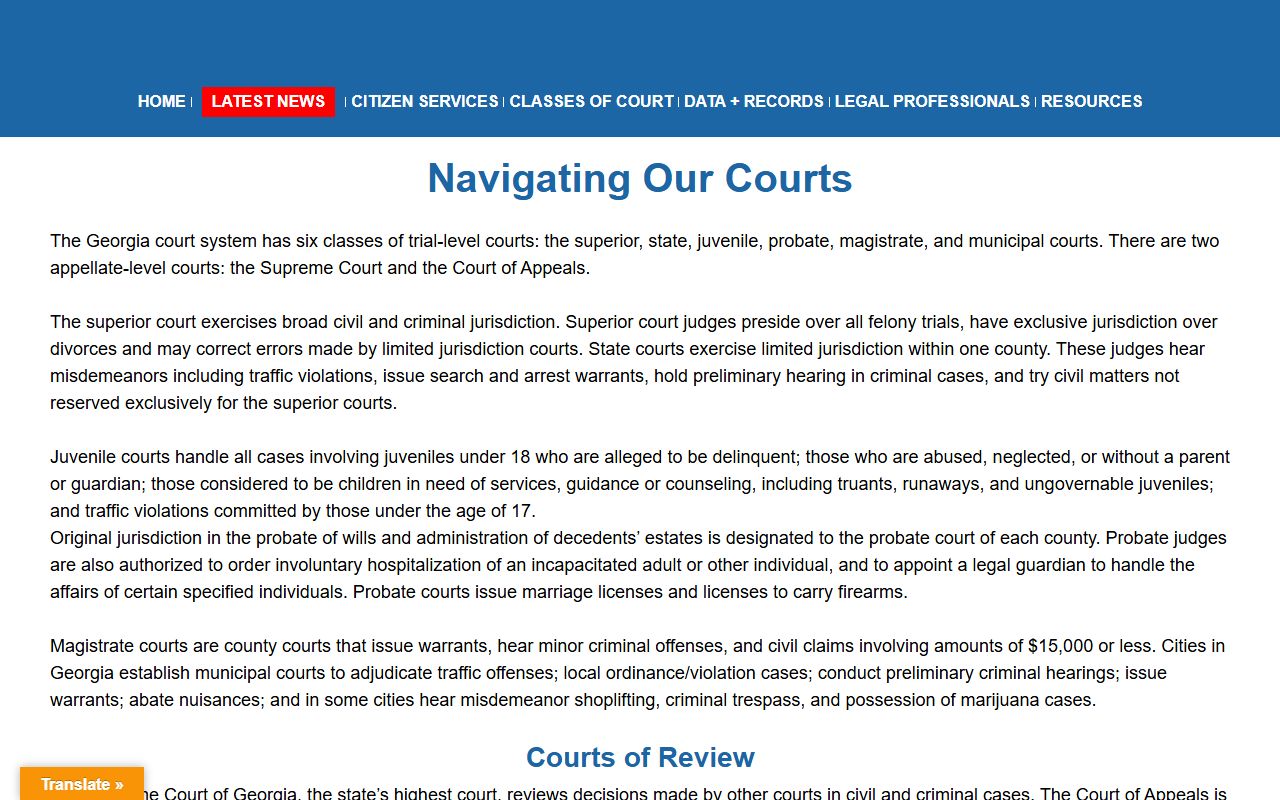
The hierarchy guide helps place a docket entry in the right court before asking the clerk for the full file.
Miller County Docket Limits
Local minutes add useful context for State Court dockets. The December 2023 county minutes describe State Court as the county misdemeanor and traffic court, and they discuss backlog, DUI license timing, jury sessions, arraignments, pleas, motions, bench warrants, and city traffic transfers after jury demand. That local detail matters because a traffic ticket or misdemeanor event may move between municipal and State Court paths, while felony-linked events go to Superior Court when felony and misdemeanor charges arise from the same event.
Older Miller County dockets may need clerk help for another reason: courthouse fire history. The county had courthouse fires in 1873 and 1974, and the present courthouse was built in 1977. Do not assume older docket books, indexes, or archived files have a modern online trail. A direct call to the clerk, Probate Court, Magistrate Court, or another custodian is the better path when an old docket, sealed entry, or non-digital file is involved.
Access limits can also be event-specific. A public docket may show that an entry exists while hiding details about a juvenile matter, adoption, protected party, sealed filing, or mental-health issue. Georgia public-record rules favor access, but exemptions and court confidentiality rules still control what staff can release. When a Miller County docket entry is unclear, ask for the event date, filing title, next hearing date, and whether the full document can be inspected or copied.