
Miller County Arrest Records and Court Charges
Arrest records begin with the law-enforcement side of the case. In Miller County, the Sheriff's Department operates the county jail, processes court orders, provides court security, and should be contacted for custody, booking, release, bond, and sheriff records. The sheriff's office is at 300 W. Pine Street, Colquitt, Georgia 39837, and the main phone is 229-758-3421. No official Miller County Georgia online jail roster or mugshot database was located in the research sources, so public access depends heavily on phone, in-person, and direct records-request channels.
Court charges after arrest are the court-facing side. Magistrate Court may handle arrest warrants, search warrants, first appearances, bond, committal, and warrant applications in Room 110 at the courthouse. The prosecutor then decides what formal charges to file by accusation or indictment. Once filed, the court charge appears in the criminal case record maintained by the Clerk of Superior Court for Superior, State, and Juvenile records. Use Miller County criminal court records for the full case file and final disposition, and Miller County inmate records for custody questions.
How to Find Miller County Arrest Records
Because Miller County does not publish an official local jail roster in the reviewed sources, a search should follow the record from arrest to charge. Start with the sheriff for booking and current custody. Then check Magistrate Court if the arrest involved a warrant, first appearance, bond, or committal. If the prosecutor has filed formal charges, ask the Clerk of Superior Court for the Superior or State case record.
- Call the Miller County Sheriff's Department at 229-758-3421 for custody, booking, bond, release, and arrest-record routing.
- Ask whether the person is still in the county jail or has been transferred, released, or moved to another agency.
- For warrant, first appearance, bond, or committal records, contact Magistrate Court at 229-758-4110 in Room 110.
- For filed charges, call the Clerk of Superior Court at 229-758-4102 or use the official clerk case-search link if it is available.
- For sentenced state-prison or probation information, use Georgia Department of Corrections channels rather than the county jail.
The official clerk case-search endpoint at millerclerkofcourt.com/WebCaseManagement was linked from the clerk site but not fully inspectable in research. If the portal does not show the charge, ask the clerk whether the file is paper, archived, sealed, restricted, pending entry, or held by Magistrate, Sheriff, or prosecutor records.
Charging Documents After Arrest
Georgia terminology in the research supports indictment and accusation as the key formal charging documents for criminal court records. The initial arrest charge may be based on an officer's allegation, warrant, citation, or booking entry. The prosecutor's filed accusation or grand-jury indictment is the document that moves the allegation into the court charge record. Serious felony prosecution goes through Superior Court in the Pataula Judicial Circuit, while Miller County State Court handles misdemeanors and serious traffic matters according to county minutes.
| Document or entry | Where it fits | Record custodian |
|---|---|---|
| Booking or arrest entry | Documents the arrest event, custody status, initial charge, bond target, or release information if releasable. | Miller County Sheriff's Department |
| Warrant or first-appearance record | Shows arrest or search warrant activity, bond, committal, or early hearing activity. | Magistrate Court or issuing court |
| Accusation | Prosecutor-filed charging document, often used for misdemeanor or other prosecutable charges. | Clerk of Superior Court after filing |
| Indictment | Grand-jury charging document for felony prosecution. | Clerk of Superior Court after filing |
| Docket entry | Chronological court event showing arraignment, plea, motion, dismissal, disposition, or sentence. | Clerk of Superior Court |
The Georgia Department of Corrections main site is available at gdc.georgia.gov.
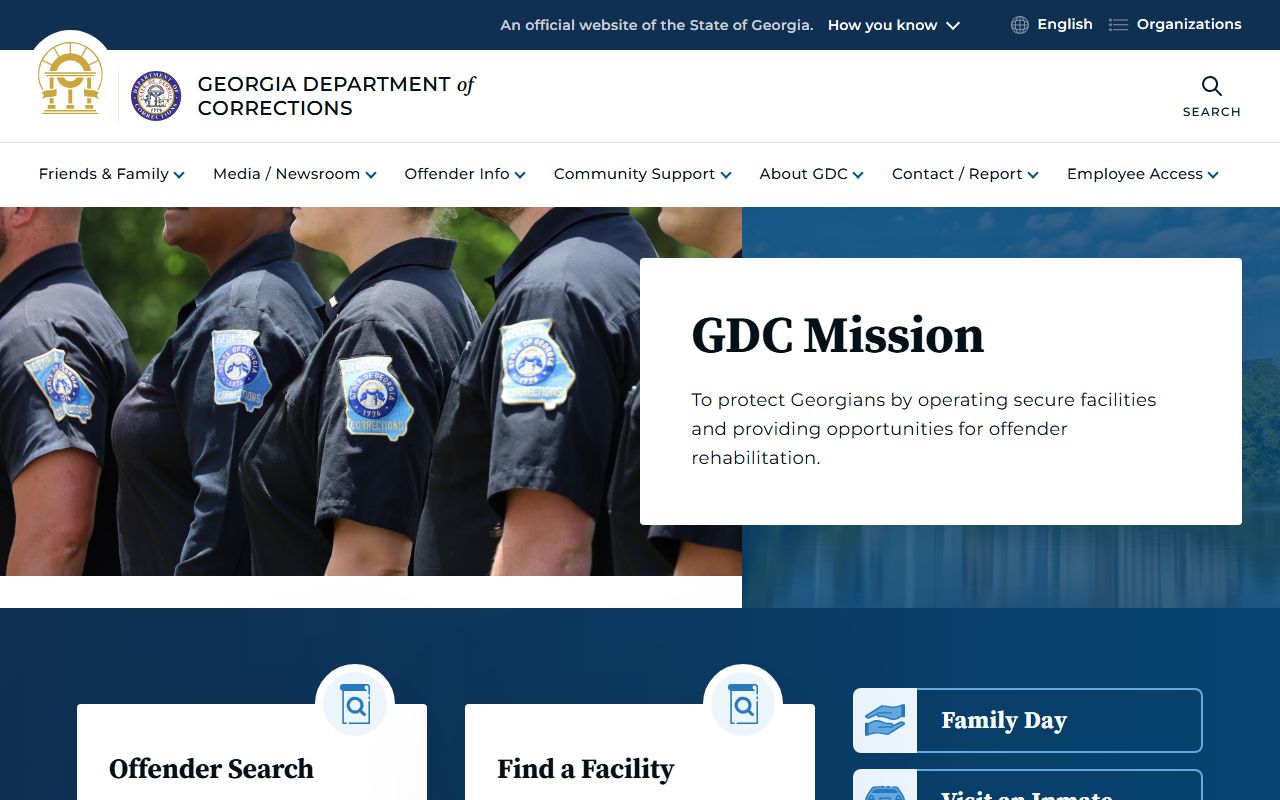
GDC is useful after a person enters state custody or supervision, but new Miller County arrests should still be checked with the sheriff and local court offices first.
Charge Status and What It Means
Charges can change after arrest. An officer's initial arrest description may not match the prosecutor's final accusation or indictment. A count may be amended, reduced, dismissed, nolle prossed, merged into another count, or resolved by plea. For that reason, the filed court charge and final disposition should be read together.
| Status | What It Means |
|---|---|
| Initial or arrest charge | The charge listed at arrest, booking, warrant, or citation stage. It is not automatically the final filed charge. |
| Pending | The filed charge remains open and has not reached final disposition. |
| Amended or reduced | The prosecutor or court record shows a changed charge, level, or count. |
| Dismissed | The court record shows the count did not proceed to conviction. |
| Nolle prosequi | The prosecutor declined to continue that charge, often shown as nolle prossed or similar docket language. |
| Convicted or sentenced | The charge resulted in a guilty plea, verdict, or accepted plea with sentence or probation terms. |
Charge vs. Conviction
A Miller County arrest record can show a person was taken into custody or accused of an offense. A conviction is different. It requires a court outcome such as a guilty plea, verdict, or other adjudication reflected in the disposition and sentence. When a record is used for employment, housing, licensing, or another regulated purpose, do not rely on a casual arrest or charge lookup.
| Comparison | Charge | Conviction |
|---|---|---|
| Proof point | Arrest, warrant, accusation, or indictment alleges an offense. | Court disposition confirms guilt or accepted plea. |
| Where it appears | Sheriff booking, Magistrate warrant, prosecutor filing, or clerk docket. | Clerk docket, sentencing order, certified disposition. |
| Can it change? | Yes. It may be amended, reduced, added, or dismissed. | The final judgment can be corrected or appealed, but it is not merely an accusation. |
| Best verification | Compare arrest record with the filed charging document. | Request certified disposition from the Clerk of Superior Court. |
Statewide Arrest and Charge Lookups
The Georgia Department of Corrections Find an Offender tool is a state-prison and supervision search, not a county jail roster. Georgia.gov says adult offenders can be searched by name, ID or case number, age, and identifying information, while county jail inmates should be checked at the county source. GDC warns that photos, if available, display automatically and that users should verify information by written correspondence before relying on it.
The GDC offender query appears at services.gdc.ga.gov.
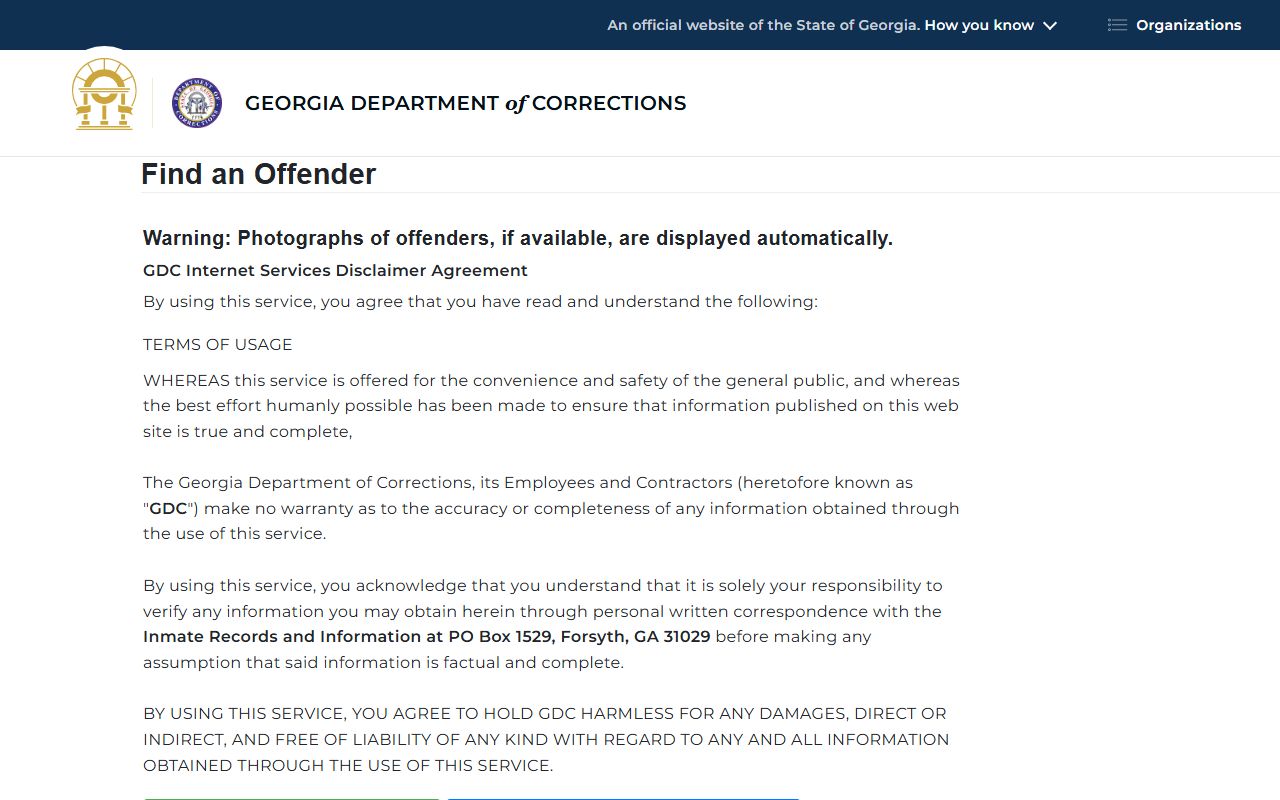
Use the GDC query for sentenced or supervised offenders, then return to Miller County court records for the original local charge and disposition.
Georgia.gov also explains the offender-search service at georgia.gov/find-offender.
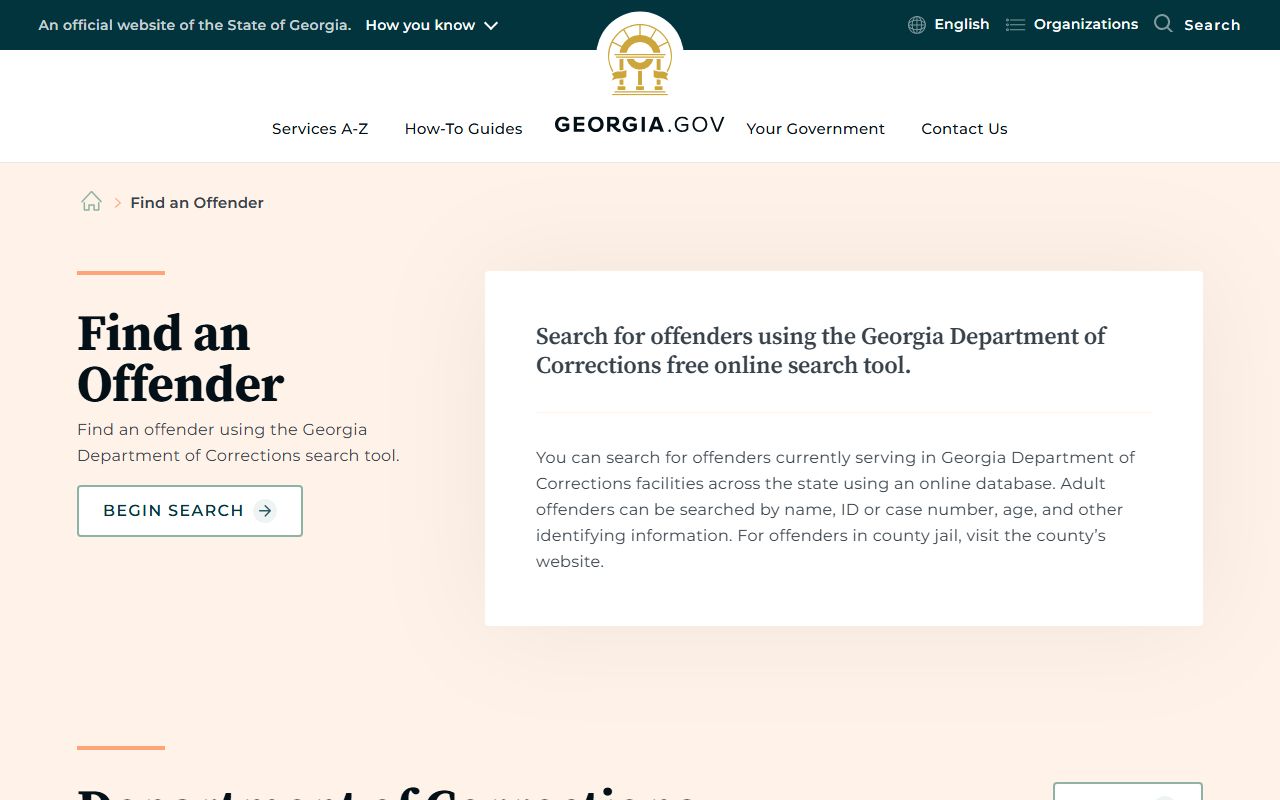
The Georgia.gov service page reinforces the county/state split: Miller County jail information stays with the sheriff, while state-prison information belongs with GDC.
The Georgia Bureau of Investigation sex offender registry is available from GBI's sex offender registry page.
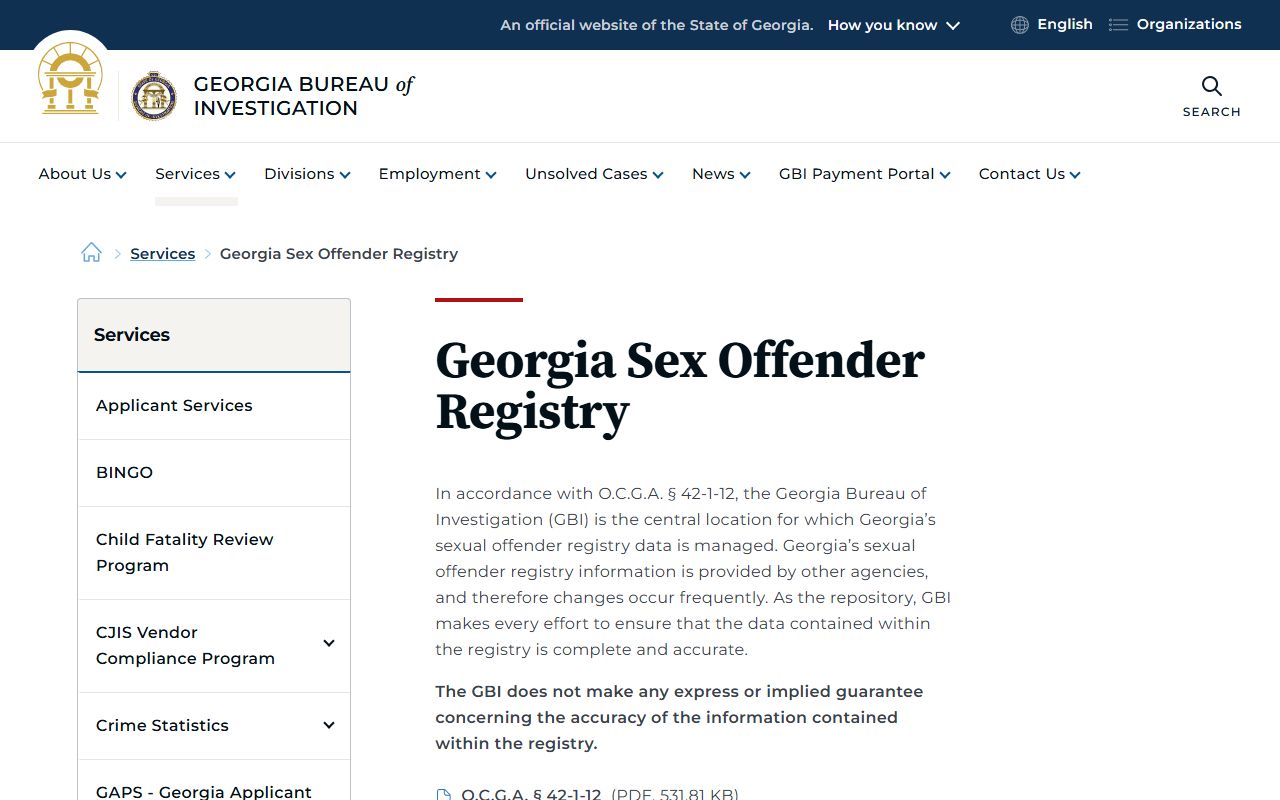
The registry is a separate conviction-based public-safety registry and should not be treated as a general arrest-record or open-charge database.
Restricted Arrest Records and Charges
Georgia's criminal-history restriction statute, O.C.G.A. 35-3-37, is the key authority identified in the research for eligible criminal-history restriction. The process can depend on the arresting agency, prosecutor, court disposition, and criminal-history system. A dismissal, acquittal, nolle prosequi, or not-presented case may be relevant, but eligibility is not automatic for every arrest or charge. The public court file and a GBI or GCIC criminal-history record are related but separate records.
Sealed court records, juvenile records, adoption records, mental-health or involuntary-treatment matters, and active investigative material may be unavailable to the public. Georgia Code 9-11-7.1 also requires redaction of sensitive personal identifiers in civil filings, and criminal files may have confidential information removed before public release. Ask the custodian whether the record is public, redacted, sealed, restricted, or held by another office.
| Point of comparison | Sealed | Restricted under Georgia criminal-history rules |
|---|---|---|
| Primary effect | Limits public access to a court file or filing. | Limits public dissemination of eligible criminal-history information. |
| Likely starting point | Clerk of Superior Court or the judge that controls the file. | Arresting agency, prosecutor, court disposition, and GBI or GCIC process. |
| Common misunderstanding | Sealed does not mean every related record disappears. | Georgia restriction does not mean every law-enforcement or court copy is destroyed. |
Phone, In-Person, and Records Request Chain
For Miller County arrest records, start with the Sheriff's Department because it operates the jail and holds sheriff records. For warrants, first appearances, and bond hearings, call Magistrate Court. For filed charges, case events, pleas, and dispositions, contact the Clerk of Superior Court. For felony prosecution questions, the Pataula Judicial Circuit District Attorney is the prosecutor. For appointed-defense routing, contact the Pataula Circuit Public Defender. For state custody or supervision after sentencing, use GDC. For sex-offender registration, use GBI.
The county open-records PDF says requests for constitutional offices such as the Sheriff, Clerk of Court, Tax Commissioner, and Magistrate/Probate must go directly to those offices. That means a general county government records request is not the right first step for a jail booking, court charge, warrant, or criminal docket. A written request should include the full name, date of birth if known, arrest date, case number if known, charge, court, requested record type, and whether a certified copy is needed.
Background Check Considerations
Arrest and charge records are often incomplete if read alone. A lawful background check may need the sheriff booking record, clerk disposition, state criminal-history response, and registry checks depending on purpose. This site is not an FCRA-regulated consumer reporting agency, and casual lookups should not be used for credit, employment, tenant, insurance, or similar decisions. Always verify arrest charges and outcomes with the originating government office.